Wednesday, 25 November 2026 |Wednesday, 14 Jum. Akhir 1448 H
Visiteurs en ligne : 4.424
aujourd hui
:
94.264
Hier
:
153.000
La semaine dernière,
:
2.656.496
Le mois dernier
:
11.429.130
Vous êtes le visiteur numéro 105.216.314 Sejak 01 Muharam 1428 ( 20 Januari 2007 )
AGENDA
No data available
News
29 april 2010 05:00
Mesolithic cave discovered in Pagaralam
Pagaralam, Indonesia - A Mesolithic cave was discovered by the residents in Talang Kubangan Hamlet, South Dempo sub-district, North Sumatra.
The three-storey cave located on a hilly and deep a forest has two entrances and seven rooms and also showed some human footprints.
Due to natural causes of rock sedimentations, the cave`s rooms are narrowing and covering some of the cave`s ancient hand palm murals.
The local residents actually have acknowledged this cave for a long time known as the "Rie Tebing" cave from the urban hereditary myth, where a hermit had stayed and formed the cave, a Talang Kubangan community leader, Manto.
The cave itself is impossibly formed naturally, because the surrounding area has different types of rocks from the one in the cave, then it must be man-made cave, especially after seeing the neatly carved stone bed in one of the rooms, Manto said.
According to Manto, there is also one underground room in the cave structure which only an expert can get into the two meters deep chamber.
Manto said that there are many ancient remains in the area but due to the residents` lack of knowledge, the site only becomes an urban storey and ancient sacred history
Local residents just discover the high historical value of the site after several experts published it in the media.
A Palembang Archeology institute researcher, Kristantina Indriastuti said that the discovery was simply incredible and horrendous, because the Paleolithic residence is only known in Kikim sub-district, Lahat, and Mesolithic cave findings in Ogan Komering Ulu district, South Sumatra.
She said that due to the dry floors, the cave was possibly used as a residence, but further investigation is needed to discover the cultural supporting activity layer in the site.
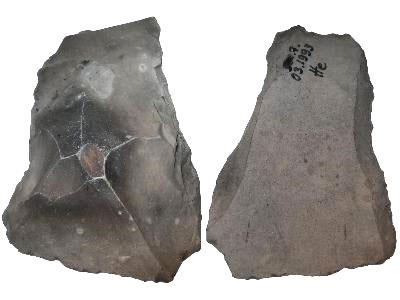
This evidence of the cave`s residential possibility can be proven by the remaining things like charcoal, subsistence (food seeking activity), burial activities, repairs, manufacture of stone tools, and Stone Age man tools, including stone axes, flakes, shavings, and other tools.
"Based on the South Sumatra area with its limestone or Karst Mountains condition, such as the one in Bukit Barisan, cave life activities are possible," Kristiantina said.
There are about 13 caves in the Karst plateau, Kerinci in Jambi Province, and to preserve the cave authenticity, a local community and the Jambi Prehistoric Legacy Conservation Center (BP3) support is needed, she said. (*)

 aujourd hui
 Hier
 La semaine dernière,
 Le mois dernier