Saturday, 13 June 2026 |Saturday, 27 Dzulhijah 1447 H
Visiteurs en ligne : 1.528
aujourd hui
:
18.076
Hier
:
18.252
La semaine dernière,
:
227.151
Le mois dernier
:
9.252.016
Vous êtes le visiteur numéro 105.216.314 Sejak 01 Muharam 1428 ( 20 Januari 2007 )
AGENDA
No data available
News
25 juni 2010 07:38
Makyung Plays Ready To Explore New Avenues
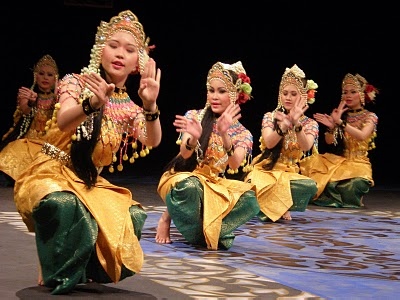
Kuala Lumpur, Malaysia- Makyung, the traditional dance drama from Kelantan, is considered the most authentic and representative of Malay performing arts.
However, this intricate stage play with its unique songs and musical repertoire is slowly going into oblivion.
Thus the Culture and Arts Department (JKKN)is working out innovative ways to preserve this cultural heritage by encouraging the active participation of the younger generation.
The department's Director-general Datuk Norliza Rofli elaborated on the efforts to revive the Makyung.
"We have to find ways to make Makyung relevant with times and ensure its survival. We want to ensure the continuity of this traditional art form and its performers are rewarded for their knowledge and skills," said Norliza.
She said this during the Exploring Makyung 2010 seminar held recently with the objective of reforming the various aspects of the dance drama - staging, script, choreography, discipline, technical aspects, language and the duration of the play.
The Survival of Makyung
The question remains, in ensuring the survival of Makyung would changes to suit the taste of contemporary audience suffice?
UiTM's dean of Creative and Artistic Technology faculty Prof. Dr Hatta Azad Khan in his working paper entitled 'Exploring and Sustaining the Art of Makyung' noted that while traditional art forms like the 'wayang kulit' (shadow play) and Makyung relatively have strong following in Kelantan, in reality the traditional theater artistes are often financially strapped.
"They have families to feed. With no steady income, they can't survive by just being traditional performers," he pointed out.
Prof Hatta related that the feedback from undergraduates who conducted a study on traditional art forms show that traditional art performers are a disappointed lot.
"Many of those practicing these art forms lamented that the society is no longer interested in their work, or they are too old to continue and there is no one from the younger generation to take over.
"Even more disappointing is that there is no innovation or new creative ideas in staging the plays. The Makyung plays are clearly lacking in the audio and lighting systems, the shows are not properly planned and lastly the shows are meant for the same audience.
However, for people like Dr Hatta there is a more fundamental question that has to be resolved. Is their presentation of the art forms is of low value to the extent the modern society shuns them or have they lost out to the unlimited modern entertainment available today?
Seeking Effective Transformation
Dr Hatta begged to differ on both stating that traditional art form still has a place in the society but needs to undergo transformation to stay relevant.
"Transformation here does not mean total change. The format and style are maintained only that the presentation techniques are improvised to suit the contemporary taste," explained Prof Hatta.
Another pertinent point that according to Prof Hatta could keep the art form alive is financial returns.
"In the modern world of ours today, audience must pay to attend shows. This means it involves marketing strategies, that includes advertisement and promotion", he said.
Exploring Makyung
As for those not familiar with Makyung, it basically combines elements of dance and drama and the show can go on up to five hours. The dialogue of the characters is based on traditional Kelantan-Pattani epics. The audience have to follow closely the dialogue to appreciate the plays but those not well versed in the Kelantanese dialect may have difficulties in grasping the dialogue.
Moreover, the original Makyung has no stage sets depicting scenery and instead uses simple items like the 'rotan berai' (cane) that is held in the hands by the pakyung (lead actor) and the machete held by the peran (jester).
Another presenter at the seminar Zulkifli Ab. Rashid or better known as Zulrashid proposed some improvements like adding synography (theater design) for Makyung performance.
Zulrashid who as worked as an Artistic Director, Lighting Director and Stage Manager for Istana Budaya pointed out that stage design, props, lighting, audio, multimedia and special effects, could help bring profound effects.
Benchmarking
Maybe there are some who don't believe that Makyung can be presented in a different manner. Nonetheless, the Makyung Titis Sakti (MTS) produced by the Actors Studio last year proved otherwise. MTS could definitely serve as a benchmark for future Makyung presentations.
MTS was staged using a new script by Norzizi Zulkifli and Nan Megat, that was based on a great play by William Shakespeare - A Midsummer's Night's Dream (MSND).
The play was staged by young talents, with the backing of a creative production team - set designer, music director, choreographer, and lighting and costume director. The outcome was MTS enjoyed 'full house' for the five days it was staged.
How can it succeed? According to Norzizi, the adaptation based on Shakespeare's play was not difficult for MTS because both plays have numerous similarities in characters.
"The Makyung storyline very much revolves around the happenings in the royal courts. Added with supernatural characters, the Makyung storyline has mythical elements. Therefore, as a director, I feel Shakespeare's work can be presented through Makyung," he explained.
Adapting Shakespeare’s Works
According to Norzizi, the adaptation process enabled the characters in Shakespeare's works to appear like the cast in Makyung - the lead dancer Pakyung playing the role of the king, the Pakyung Muda being the prince and hero, the queen being the Makyung, and the princess and heroine being the Puteri Makyung.
The other cast include palace servants and jesters and the supernatural characters.
To preserve Makyung's philosophy, the dance rhythms were maintained. Norzizi also maintained the musical instruments of Makyung and added modern instruments like the keyboard, percussion and chime. However, the songs accompanying the play were added with new ones.
The emphasize was on the costume of the performers added with the lighting effects that further enhanced the mood of the show. The success of the show is the turning point for Makyung.
"As for me, the Makyung can appear in many ways, whether in its original form or through adaptation. This does not mean the art form has lost its authenticity and one has to understand any art form will definitely evolve.
Apart from the storyline, the language too can be adapted in Malay or English. And it is up to the production team whether to maintain the original songs or change them.
"The characters too can be switched, for example the roles can be played by children for Makyung that takes the story line of Bawang Putih Bawang Merah, Batu Belah Batu Bertangkup, Cinderella or Snow White," explained Norzizi who has taken the initiative to hold Makyung classes for the children and adults every Sunday to train the new generation of Makyung performers.
Not on the Paper Only
Based on the presentation and the discussion on the seminar, a total of nine resolutions were made to rejuvenate Makyung.
Among them is enhancing the storyline without changing the Makyung presentation structure and to explore how the stage technology like lights, audio and special effects can further improve presentation.
To further enhance Makyung, efforts must be taken to promote the art form and train more performers.
Makyung also calls for the creation of a wider audience base especially among the younger generation.
More importantly, the Makyung has to be documented and the resolution also wants the Makyung genre to be diversified into films and video. Makyung should also be turned into a creative industry product to provide economic value.
If the Makyung is to survive the test of time, the resolution should not remain on paper only. If UNESCO can acknowledge Makyung as a world heritage, then Malaysia must elevate Makyung Kelantan to a national heritage. (Nurul Halawati Azhari)


 aujourd hui
  Hier
Hier  La semaine dernière,
  Le mois dernier