Rabu, 25 November 2026 |Khamis, 14 Jum. Akhir 1448 H
Pengunjung Online : 7.231
Hari ini
:
115.951
Kemarin
:
153.000
Minggu kemarin
:
2.656.496
Bulan kemarin
:
11.429.130
Anda pengunjung ke 105.216.314 Sejak 01 Muharam 1428 ( 20 Januari 2007 )
AGENDA
Belum ada data - dalam proses
Berita
24 juni 2010 06:43
Makyung Teater Adopts Changes To Stay Relevant
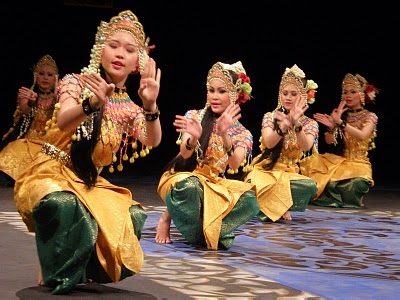
KotaBaharu, Malaysia - The Makyung is the only traditional Malay theater performance recognised as one of the World Arts Heritage by the United Nations' Education, Scientific and Cultural Organisation (UNESCO).
Since receiving the recognition under the Intangible Heritage category in 2005, the Makyung that combines story telling, music, dramatic elements, dance and costume received a new lease of life.
The staging of the traditional theater that originated as 'Mak Hiang', the paddy spirit in the Siamese language, in the early days was limited to the royal court of Kelantan.
Makyung’s Transformation
With the passage of time, Makyung transformed from an exclusive stage show for the nobility to the entertainment of the masses. Nonetheless, with the passage of time the performers of this art form and their audience started dwindling.
According to the Director-General of the Arts and Culture Department Datuk Norliza Rofli, the Makyung did not go down well with the powers that be in Kelantan and added with the competition from modern entertainment the dance drama was sidelined.
To reverse Makyung's fate, the department has taken proactive steps to promote the traditional theater outside Kelantan. The Makyung has underwent a revamp with the ritual elements eliminated and the show duration reduced to make it commercially appealing.
To ensure the very survival of this art, the department has rolled out programmes like Makyung Enhancing Apprentice Workshop that was held here recently.
The main objective of the workshop held with the cooperation of the Kelantan State Arts Body is to improve the knowledge and skills of the Makyung performers in Kelantan who have a big role in keeping the traditional theater alive.
Apprentice the Saviors
In Kelantan, there is only three groups actively staging Makyung with the Kijang Emas group consisting of 36 youths from Kota Baharu and Pasir Mas being the apprentices who are helping to keep the Makyung alive.
The troupe has been adopted by the department and considered the professional performers of Makyung.
The group conducts three practice sessions per week where the apprentices were taught of the roles that they have to take on in performing Makyung - the king, queen, nobility, comedian and the warriors.
They are also taught of the various Makyung epics like the Anak Raja Gondang, Dewa Muda and Dewa Pecil and the accompanying songs that include Pakyung Muda, Sedayung Makyung, Sedara Tonggek and others.
Though it has only been a year, the talent shown by the apprentices is something to be proud of. Though they have to compete with other forms of entertainment, looking at their interest and earnestness, the Makyung is here to stay, at least for the time being.
Open and Daring
According to the Project Officer Junaidah Salleh, though the Kijang Emas troupe has a good grasp of the philosophy and in staging Makyung, they still have to be polish up their acts to reach a higher level of showmanship.
As the troupe members have never been exposed to formal training in performing arts, the workshop helped to expose them to the new elements in performing arts.
Assisted by professional instructors from the department, the three day workshop on Makyung not only emphasized on the music, dance and acting, but also on the artistic aspects, ethics and the way of thinking when performing the Makyung.
As for apprentice Nor Bariah Mohd Salih, 22, as a full time Makyung artiste, the exposure at the seminar provided many valuable lessons in performing arts.
Realising of her responsibility in bringing the traditional theater to greater heights, Nor Bariah who has been performing Makyung for the last four years is hopeful that she and her colleagues will be able to better their performance. The main aim is to win over the younger generation.
She takes on the Pakyung role and feels that there is more to learn to bolster the troupe's performance.
Modern Elements Needed
As for Mohd Idris Mazlan, 27, since he got involved in Makyung six years ago, his interest on the traditional performing arts developed further. Idris takes on the comedian role and at times plays the rebab (Malay violin) and serunai (flute) accompanying the show.
He has taken a certificate course in percussion at Aswara and hopes that the group would be able to bring changes to Makyung to allure a bigger audience.
"You need talent and interest to perform Makyung and to make it appealing for the younger generation," explained Idris who has performed Makyung in Japan.
Rohani Mat Zain, 52, a old timer who doubles up as the performer and instructor of the group, pointed out it was time for the Makyung to incorporate modern elements into its storyline.
The apprentices are the one who would help to reform the Makyung and make it more appealing to a wide spectrum of audience like how the Zapin dance of Johor made its way into the hearts of the people.
Change According to Times
Whether you like it or not, to ensure that Makyung remains relevant with times, it must undergo reforms like the Japanese traditional theater Kabuki.
The Kabuki has come a long way from the days where it was performed on the stages set near the river banks. It is now staged in modern settings with a host of new stage equipment. Most importantly the Kabuki of today has managed to establish the performers/audience interaction.
The openness and earnestness of those advocating this art form have managed to popularise Kabuki and the art form has been handed down from generation to generation. In fact, the National Theater in Tokyo has its own training school to train the next line of Kabuki performers.
Lastly, Kabuki advocates have found a way to attract younger audience without ignoring the real philosophy behind the art form.
This is what one wants to see in Makyung. The staging of Makyung should no longer be restricted to the 13 storylines, among others the Dewa Muda, Bongsu Sakti, Gading Bertimang, Raja Tangkai Hati, Dewa Pecil, Raja Muda Lakleng, and should add contemporary storylines to engage the younger generation.
The dikir barat and the wayang kulit have been given a new lease of life and they are now being staged again in Kelantan, so there is no reason why Makyung should not be given a new lease of life. (Nurul Halawati Azhari)

 Hari ini
 Kemarin
 Minggu kemarin
 Bulan kemarin