Minggu, 16 Agustus 2026 |Isnain, 2 Rab. Awal 1448 H
Pengunjung Online : 765
Hari ini
:
16.788
Kemarin
:
43.662
Minggu kemarin
:
179.363
Bulan kemarin
:
11.454.048
Anda pengunjung ke 105.216.314 Sejak 01 Muharam 1428 ( 20 Januari 2007 )
AGENDA
Belum ada data - dalam proses
Berita
10 sepember 2009 02:00
Kubu Tribespeople Struggle Without Traditions
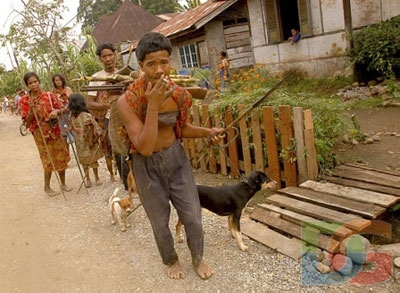
Jambi - Displaced Kubu tribespeople forced from their traditional homelands are living in a state of uncertainty along the Trans-Sumatra highway, with most begging to survive.
While many members of the Kubu tribe live in the Bukit Duabelas and Tigapuluh National Parks, where the state has guaranteed them land to carry out their customs and traditions, some marginalized elements of the tribe have been eking out a living along the highway between Jambi, West Sumatra and South Sumatra.
Data from KKI Warsi, an NGO concerned with forest communities and the conservation of natural resources, shows there are around 3,000 Kubu tribespeople living in those national parks, where they are allowed to cultivate land, hunt for boars and turtles and perform the belangun nomadic ritual if a family member dies.
They are also permitted to establish rubber farms on the outskirts of the national parks to define their zones and territories.
However, the figures on the number of displaced tribesman is less clear.
Temenggung Kitab, a displaced Kubu tribesman living at the Margoyoso intersection along the Trans Sumatra highway, said he used to live in the forest but it had since been converted into an oil palm plantation.
"I was forced to leave the forest a few years ago," he said.
Since then, he and a number of other marginalized members have been living within conventional society, attempting to continue traditions by migrating from place to place.
"We would be driven out if we entered the oil palm farms. So, where else should we go?` Kitab said.
Those living outside the national parks have survived by hunting wild boars to sell at the nearest market, and at best they can make Rp 200,000 (about US$20) per week. When times are tough, they go without food.
Jambi KKI Warsi spokesman, Robert Aritonang, said this was a serious problem that needed immediate attention from the government.
"We cannot let them live along the highway constantly," he said.
Aritonang said the government could provide them with land, but need to understand that housing would not be used due to the Kubu nomadic tradition.
"It will take a long time for them to adjust to living like a villager," he said.
Head of the Jambi Natural Resources Conservation Center (BKSDA), Didy Wurjanto, said the Kubu tribespeople could not be separated from the forest, essentially their natural habitat. Jon Afrizal


 Hari ini
  Kemarin
  Minggu kemarin
  Bulan kemarin