Saturday, 21 November 2026 |Saturday, 10 Jum. Akhir 1448 H
Online Visitors : 0
Today
:
6.005
Yesterday
:
104.679
Last week
:
821.392
Last month
:
11.429.130
You are visitor number 105.216.314 Since 01 Muharam 1428 ( January 20, 2007 )
AGENDA
No data available
Artikel
05 maret 2008 01:53
Political Ecology and Conflict in Ankarana, Madagaskar
The southern end of the Ankarana Massif from the air
By : Lisa L. Gezon
Conflict over issues of land use in northern Madagascar reveals that political control is situational and that rights to resources are ambiguous. In two cases, local farmers, the regional royal indigenous leader, and international conservationists struggled to establish and maintain the ability to use and manage the forested land to the west of the Ankarana massif. Political ecology provides a theoretical framework for exploring the complex political negotiations that are an integral part of all ecological interactions. In recognizing the complexity of such interactions, applied attempts to address issues of environmental degradation and disenfranchisement may also become more effective. (Madagascar, political ecology, conservation, conflict)
The protected forest of the Ankarana Special Reserve, in northern Madagascar, has a history of local tensions over who possesses rights to land use and under what circumstances. Effective control over land use is situational more than it is predetermined or consistently executed according to a set standard. The cases reported here reveal land—and resource—use rights to be ambiguous, overlapping, and even contradictory. Examining cases of conflict shows the theoretical interdependence of political and ecological analyses by considering how people with different interests and access to power continuously negotiate rights to manage and use the environment of the Ankarana region. Political ecology, an interdisciplinary approach that incorporates political economy and cultural ecology into one frame of analysis, provides a useful perspective for studying the complex dynamics of human interactions with the environment. By focusing on links between local, national, and international contexts, scholars have shown that ecological relationships extend beyond local geographical and political boundaries (Campbell and Olson 1991; Grossman 1993; Moore 1993; Jarosz 1993; Sanabria 1993) and that social differentiation is an important factor in resource management, as some possess greater rights to access and manage resources than others (Carney 1993; Schroeder 1993; Johnston 1994; Bryant 1995; Rocheleau et al. 1996).
This article contributes to political ecology by focusing on textured analyses of multilevel political interactions and processes, showing their relationship to the regulation of control and use of the biophysical environment. While quantitative analyses have frequently been considered the benchmark of studies in ecological anthropology, detailed qualitative analyses of micropolitics and sociocultural processes also reveal important aspects of the patterns of human interaction with the biophysical environment. Geographers Richard Peet and Michael Watts (1994:240) note "the absence of serious treatment of politicsin political ecology" and call for qualitative studies "integrating political action-whether everyday resistance, civic movements, or organized party politics-into questions of resource access and control” (Peet and Watts 1994:240). Vayda (1983:271) also points out the limitations of quantitative methodologies and advocates "methods with a fluidity or flexibility to match that of the things and processes we were trying to understand." The following analysis examines cases of conflict to gain insight into how different actors and authorities (the politicoreligious leader, the people living on the periphery of the forest, and the conservation organization in tandem with the government of Madagascar) vie for access to forested land.
Understandings in political ecology go beyond theoretical relevance in their ability to suggest forms of resource management which take into account the complexity of political and economic interactions. As Vayda (1983) suggests, ecological writings are most useful if they address some of the concerns of policymakers as well as those of academics. These cases suggest that proponents of conservation and development must critically examine the goals and consequences of economic development and question whether specific conservation interventions lead to the emancipation or to the further marginalization of people in and around protected areas. By striving to understand local politics of resource management, to recognize social differentiation at the local level, and to incorporate local people fully into all phases of interventions, projects can facilitate people in meeting their own long-term resource needs.
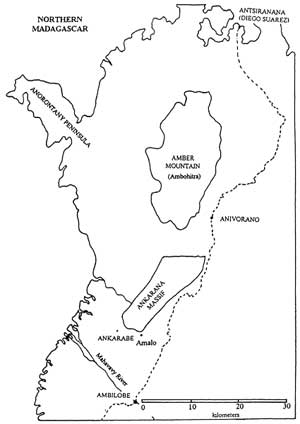
Figure 1: Northern Madagascar (names and exact locations of the villages have been changed).
Background
In the Ankarana region of northern Madagascar (see Figure I), political authorities from several domains (including royal indigenous leaders, village elders, state officials, and international conservation nongovernmental organization [NGO] personnel) struggle to maintain rights to use and manage the local forested land. The Antankarana ethnic group is at the far northern reach of the Sakalava dynasty, which expanded along the west coast of Madagascar in the seventeenth and eighteenth centuries. As internal disputes threatened political cohesion, some branches of the Sakalava royal family moved north to establish their own political circumscriptions. In the far north, the royal family, along with the local people, called themselves Antankarana, a locative for People of the Rocks, referring to the Ankarana limestone massif which is now a nationally protected area.
During colonialism, the French officially recognized the Antankarana royal line and administered the local territories through the Antankarana royal leader, called the Ampanjaka, until the 1950s, when civil servants assumed these responsibilities. In the interest of maintaining contact with the nation‘s rulers, the royal leaders moved out of the rural royal capital village, called Ankarabe, to Ambilobe, a nearby town. After independence in 1960, the royal network has continued to have political and religious authority over the lives of the local people. The Ampanjaka is influential in setting a royal ritual agenda, in communicating with the royal ancestors, in extracting tribute in the form of rice and cattle, in mediating certain conflicts, and in serving as an occasional liaison between local people and outside governing bodies. The Ampanjaka is at the top of a complex hierarchy of decision makers and hereditary title-holders, where three levels of counsellors advise him and handle royal issues at local levels. Although the state does not officially incorporate the Ampanjaka or any other indigenous leaders into its governing structure, national leaders have often solicited the support of these local leaders because of their connection to the people. The Ampanjaka‘s primary influence is among those in villages to the north, west, and south of the Ankarana massif, as well as among those in the town of Ambilobe, to the south of the massif. The current Ampanjaka took his position in the early 1980s at a comparatively young age, when he was in his late thirties. He does not hold a state governmental position by virtue of his royal title, but was a law enforcement officer before being named Ampanjaka and continues to work in that capacity. He lives with his wife and eight children in Ambilobe and goes to the royal capital village of Ankarabe on ceremonial occasions and for visits.
The Antankarana people living on and around the Ankarana limestone massif are mostly mixed zebu cattle herders and rice farmers. On the southern end of the massif, many also grow a variety of cash crops, including sugar cane, tobacco, and cotton. Some families have lived in the region for generations, while others have migrated to the region more recently. A major wave of immigrants arrived within the first two or three decades of colonization (which began officially in 1896) as people fled colonial wars in other parts of the country and came to the north to take advantage of employment opportunities offered by the French. These migrants tended to integrate into the local Antankarana ethnic context, as they maintained an allegiance to the Ampanjaka and referred to themselves as Antankarana. They arrived at a time when land was plentiful, and many are landowners today. Although they turn to the Ampanjaka for religious leadership, local elders take the lead in managing village-level political affairs either in family meetings or as leaders in the state sanctioned village council (fokonolona).
International political influences are present in a conservation and development project called the Integral Project of Conservation and Development of the Complex of Protected Areas of the Montagne d‘Ambre (translated from the French). The project area comprises several protected areas, including the Ankarana Special Reserve, established by the French colonial government in 1957. World Wide Fund for Nature (WWF) manages this and several other projects in Madagascar in collaboration with the Malagasy government (through the Direction des Eaux et Forets-DEF), United States Agency for International Development (USAID) through the SAVEM (Sustainable Approaches for Viable Environmental Management) project, and the parastatal ANGAP (Agence National pour la Gestion des Aires Protegées), which the government legally recognized in 1991 as a private conservation agency with a public mandate. The project is a collection of agencies (USAID, WWF, Malagasy governmental offices) with general organizational goals, procedures, and mandates, and collections of individuals and smaller groups who have their own interpretations of how things should be run. In this article I will sometimes refer to the project itself as an actor, as an organization that is larger than the sum of the people in it. At other times, it is more appropriate to refer to the people who work for it as individuals, noting the internal complexities of the organization.
The following cases illustrate forest management processes and the ways that people under the various authority bases—the Ampanjaka, the local people, the state, and the conservation project—interact to negotiate rights to use and control these resources.
Amalo And Construction Wood
This case concerns the shifting alliances of the royal indigenous leader as he negotiates the opposed interests of the project and the local people. The local WWF staff attempted to enforce state law prohibiting people from entering the protected area, and the people asserted their right to cut down construction wood from the forest. The conflict occurred when the people threatened to disobey the local WWF staff, who were attempting to enforce state law prohibiting people from entering the protected area, and the Ampanjaka, who sided with WWF in refusing to allow the people to cut construction wood. The people never blatantly defied the prohibition, but over time they resumed cutting, and did so increasingly when the Ampanjaka no longer took a strong stand in favour of the project.
In July 1991, an interdisciplinary research team in which I participated[1] arrived in the village of Amalo to examine relationships between the local people and the forest resources of the area. We were working with WWF regional staff to compare satellite images and aerial photos with what we saw on the ground and to gather general socioeconomic information. The goal of our work was to inform effective conservation interventions by identifying local land-use practices. Amalo is on the periphery of the Ankarana Special Reserve, established by the French colonial government in 1956. It contains many endemic species, has much biodiversity, and its rivers provide irrigation for many hectares of rice cultivation. The most serious threats to the forest are large-scale logging and clear-cutting for agricultural fields. Since the protected area‘s inception 40 years ago, the villagers of Amalo have denuded large expanses of forest to establish fields of sugar cane. Conservation experts also suspect that herding, selective cutting for local construction, and medicinal plant gathering are potentially dangerous to the integrity of the forest. Since 1989, the area has been actively protected by the Malagasy government with the help of the United States Agency for International Development and WWF.
Having already had two visits in other villages go smoothly, we were surprised to encounter conflict at our first village meeting. The issue was selective cutting for construction wood: the people of Amalo angrily insisted that we grant them permission to cut down trees in order to repair their houses. The villagers had selected a delegation of rey amin‘dreny (elders) to visit the royal indigenous leader, the Ampanjaka, to ask for permission to circumvent the ban on cutting down small trees for local home construction. The Ampanjaka, to their surprise and dismay, announced that he supported the project‘s conservation initiatives and ordered them to stay out of the protected forest.
During the project‘s first phase (1989-91), the project staff realized that the best way to get the co-operation of the local people was to enlist the good will of their political and religious leader, the Ampanjaka. WWF named the Ampanjaka a president d‘honneur (honorary president) and called upon him to participate in conceptualizing sustainable conservation. They even sent him to attend a conference on conservation and development in Uganda. In light of the Ampanjaka‘s close ties to WWF, it is not surprising that the Ampanjaka was not receptive to the complaints of the rey amin‘dreny from Amalo.
After their failed attempt to gain the support of the Ampanjaka, the villagers decided that their only hope for gaining permission to cut construction wood was to demand permission from the project itself, and they assumed that our research team, as project representatives, could grant them this right. If they did not receive permission, they warned us, they might be forced to disobey the project and the Ampanjaka openly. Our team soon recognized that people had already disobeyed the prohibition, since there were recent ox-cart trails going into the forest. But the people preferred a legal solution to their problems so that they would not have to risk fines and imprisonment from the state and supernatural sanction from the ancestors via the Ampanjaka.
By the time I returned to the area in 1992-93, the Ampanjaka‘s communication with WWF had broken down after the project leaders who were in place in 1991 had left. As a result, the Ampanjaka‘s support of WWF had waned. Preoccupied with recruiting new leaders and beginning new phases of funding, the WWF staff had become less active in enforcing their policies and in cultivating positive relations with the local people. Even though there was a conservation agent in the village who was supposed to report infractions, many villagers continued to cut trees from the forest, no longer as concerned about the disapproval of the authorities. No one with whom I came into contact mentioned the conflict as a continued concern.
In the early part of this conflict, the interests of the local people opposed those of the Ampanjaka and WWF. Then alliances shifted when WWF‘s connection with the Ampanjaka weakened. This conflict erupted into an overt dispute that was not resolved through mediation, but subsided only when both sides stopped asserting their authority, when it went from being an overt to an underlying tension.
This conflict of interests exposes the kind of challenge that integrated conservation and development projects (ICDPs) often face: local people do not always support conservation efforts. Project personnel assume that conservation is in the best interests of the local people, yet the short-term interests of the people often seem to be at odds with project goals. In contrast to some settings, where conservation organizations protect local people against the encroachment of international corporate extraction interests, the NGO in this setting represented a direct challenge to local land-use practices. The case also showed that even though state and international authorities supported certain policies, the local people could violate them.
The Ampanjaka And Rights To Manage The Forest In Ankarabe
The subtlety of the conflict in the second case reveals ambiguities and paradoxes in the relationship of one authority base to another, as the project and the Ampanjaka each claimed an exclusive right to control access to a certain piece of forested land. The Ampanjaka and the local people resist international and state attempts to manage local resources. In this case, the Antankarana people joined the royal leadership network in camping in the protected forest during the royal cave ceremonies. The conflict most immediately concerned how to use the forest, and who had the right to decide who may use it and under what circumstances. One of the implications of having the right to control entry to the forest was the right to regulate tourism and collect money for permits. No blatant dispute had arisen over these issues, but each side continuously challenged the other‘s authority. The royal ceremonial visit to the caves of the Ankarana massif was one such occasion.
The Ampanjaka and his followers, the Antankarana people, consider some of the forest and caves near the royal village of Ankarabe as sacred, since they contain tombs of former Ampanjakas. These sacred areas are located within the protected area, but their total size is small compared to the total 18,000 hectares of the reserve. Despite the small size of the ritual sites, their use is highly regulated. According to royal rule, for example, the only time anyone may visit this area of the forest is on the occasion of this ceremony, held once every four to six years, when visiting the royal tombs is the explicit goal. On this occasion, the Ampanjaka highly encourages the masses of Antankarana people to enter the forest, where they must adhere to strict ritual dress and behaviour codes.
The cave ceremony is in itself a challenge to the project‘s conservation policies, since it takes place within the boundaries of the protected area. But in 1992, the Ampanjaka and the entire royal network proceeded with the ceremony without asking permission of the project officials. Several hundred people camped in the protected forest for three days, which required that an area be cleared to provide space for dancing, cooking, eating, and sleeping. They also cut down hundreds of saplings to construct booths for vendors and a temporary residence for the Ampanjaka. In a gesture of conciliation with the project and as a way of demonstrating his authority, the Ampanjaka invited the project personnel to attend the ceremony as honoured guests. The project staff enthusiastically accepted the invitation and did not attempt to prohibit the people from entering the forest. They realized that it would be politically dangerous to interfere with the popular royal ceremony and took the only option available to them: to accept the local rituals and claim to the forest as legitimate.
The cave ceremony revealed the ambiguity of land rights. Although both the Ampanjaka and the conservation project claimed to have jurisdiction over the forest, neither enjoyed unchallenged rights to its resources. The project had the endorsement of the state and the international community, but the Ampanjaka, with the support of the local people, took the ceremony as an occasion to contest and negotiate the project‘s exclusive claim to the land.
Land Rights And Authority
The Ampanjaka, the local people, and the project all derive their authority from different sources. The Ampanjaka owns the land by divine and historical right, and the conservation NGO was granted rights to manage the same land by the Malagasy state. The people, on the other hand, have land- and resource-use rights according to local norms of precedent and ownership. The contradiction and fluidity of these overlapping land-use claims became apparent in the first case when the Ampanjaka sided with the project against the local people, and in the second case when the Ampanjaka together with the people indirectly challenged the project‘s authority.
Relative access to power and authority is an important dynamic in analyzing the tensions between the Ampanjaka, the villagers, and the project. Power, or the means to compel obedience either through force or social and moral persuasion, is crucial to the task of asserting legitimate authority, since it lends substance and credibility. In the first case, the people of Amalo challenged the power of the Ampanjaka and the project by disobeying a prohibition to cut trees for house construction. In the second case, the Ampanjaka contested the authority of the project to determine how and when people may use the forest, as well as the power to enforce such policies.
The Ampanjaka‘s Rights And Authority
Royal ancestors and living Antankarana people grant the Ampanjaka authority, and he is able to depend on the support of the local people and to exact the compliance of foreign researchers and travellers. His power has historical roots and rests on the locally recognized claim that his royal ancestors settled in the area several centuries ago. The Ampanjaka‘s authority then became solidified during the period of colonial contact in the mid- to late nineteenth century. Early colonial accounts suggest that in the early colonial years there was internal fighting between the royal leaders (Ampanjakas) of different royal branches (Dandouau n.d.) and no single Ampanjaka was considered the sole leader of the Antankarana people. Lansing (1991) cautions that colonial accounts create reality as much as they report it and so pre-colonial political organization can only be tentatively reconstructed. As the French solidified their power in the region, however, they recognized one Ampanjaka as legitimate, and vested authority in the patriline of the family that is based in the village of Ankarabe, on the west side of the massif. With the backing of the French, the Ampanjaka‘s influence was no longer restricted to ritual and local political affairs, but became linked to the authority and enforcement mechanisms of an international power.
In the late 1940s, however, the French divested the royal indigenous leaders in Madagascar of their official state authority, and the Ampanjaka‘s influence was again restricted to that of a local politicoreligious leader. Even without formal political titles, however, royal indigenous leaders throughout the island have remained valuable allies for state authorities. National leaders, including presidents and ministers, for example, have valued the co-operation of these leaders because they tend to have a large following and influence. State officials realize that in alienating the local leaders, they could also alienate the people who look to these leaders for political guidance.
Even though many people in urban areas have come to question the Ampanjaka‘s legitimacy as a leader, most Antankarana people in the rural areas still respect and support his authority over religious political affairs. This is why they did not hesitate to follow him into the protected forest for the cave ceremony. It is also why the people‘s willingness to disobey the Ampanjaka‘s prohibition was noteworthy. People generally avoid disobeying the Ampanjaka because he can impose monetary fines or demand animal sacrifices as punishment. In this case, he even warned the people that they would be subject to supernatural sanction if they disregarded his orders.
Both cases suggest that realms of religious ritual and meaning are central to the processes of environmental management. The royal rituals do not provide a direct medium for maintaining homeostatic subsistence strategies in the region, but they do provide an arena for asserting political authority and social identity (Schlee 1992), as well as for suggesting appropriate forms of ecological interaction. The Ampanjaka is particularly important as a link between local, national, and international environmental management mechanisms because he often acts as an intermediary between local people and outside authorities.[2]
Rights And Authority In The Villages
The Antankarana villagers recognize that the protected area and even the land they inhabit and cultivate are under the jurisdiction of the Ampanjaka and the royal ancestors, even though only the cave where the ancestors are buried and several other small patches of sacred land are actually off limits. People recognize the Ampanjaka‘s sovereignty by respecting royal taboos (e.g., it is forbidden to work the land on Tuesdays) and through a system of tribute, in which the people donate cattle, rice, and labor to the royal family, usually on the occasion of royal ceremonies.
Under the Ampanjaka‘s jurisdiction, however, the Antankarana people have the right to manage the non-sacred forest, land, and water resources as privately owned or as common property. People have different land-use standards for farming, herding, and forested land. For agricultural lands, they consider claims to land ownership as legitimate if owners or their ancestors were the first to clear the land or if they purchased the land. People need not have an official title for their claims to be recognized locally. Upon the death of a landowner, land is generally divided between his or her children (both sons and daughters inherit land). When there are many children and not much property, siblings have the right to farm certain fields on a rotating basis. For herding, they manage land as a commons, and each family has specific areas where they regularly let their cattle roam. People consider forest or wooded areas to be open land where rights are not specified. Only by clearing the land can one claim it as personal property.
Political authority in the villages is based in the elders (rey amin‘dreny) and the state-sanctioned political body (fokonolona). If a conflict is between family members, family elders may intervene. If they can reach no consensus or if a dispute involves people from different families, then the fokonolona mediates. The fokonolona has several official elected positions of leadership (president, secretary, and committee members), but locally respected rey amin‘dreny have much influence even if they do not hold the elected offices. The authority of the fokonolona is based on a system of consensus, where the male elders are the most active and vocal in reaching decisions, although others also voice their opinions. Consequences for wrongdoing may be warnings, fines (cash or payments in kind), or a demand for the ritual sacrifice of a head of cattle. If the fokonolona decides that a case is out of its jurisdiction or if its members cannot come to a consensus, they may recommend that the case be sent to a more appropriate higher authority. If the case involves an infraction of ritual taboo or witchcraft accusations, for example, they may send the case to the Ampanjaka. If it concerns large-scale theft or bodily harm, they may send the case to a state-sanctioned court. In understanding local land-use management practices, it is significant to note that the fokonolona serves more the role of a mediator than a police force: the elders handle cases that are brought to them and do not seek out wrongdoers.
The case at Amalo suggests that despite the Ampanjaka‘s connection to the land, the people may nevertheless disobey royal edicts on land use. This is probably because the village authorities are largely autonomous of the royal authority network and have their own standards of justice and fairness.
The Project‘s Rights And Authority
Whereas the Ampanjaka and the elders base their legitimacy on the consensus of the local people, the conservation project derives its authority from the wealth and power of the international community and from its affiliation with the Malagasy government. This project, like many integrated conservation and development projects, has rejected the use of force and fences as effective ways to restrict indigenous use of protected areas and ensure long-term conservation (West and Brechin 1991). The alternative procedure is based on the argument that the resources cannot be protected and sustainable development cannot occur without the active support and participation of the people living around the protected areas (Ghai and Vivian 1992). Through this approach, conservation projects seek to curb local use of the forest through education and by developing means designed to provide alternative sources for what people would otherwise extract from the protected area; such as firewood, construction wood, and productive agricultural land. While some projects have explored multi-use areas, where local people are allowed restricted use of some protected areas (Hough 1991), the Malagasy projects seek to maintain strict boundaries. In a 1993 project proposal document for a second phase of funding, the staff identified two long-term objectives: 1) that the boundaries of the protected areas become established and respected, and 2) that the physical, economic, and social infrastructure would permit sustainable use of the natural resources outside the protected areas.
In keeping with the participatory approach, the NGO staff has attempted to establish positive working relations with the Ampanjaka. In so doing, they reason, they can by extension secure the co-operation of the people. As the first case has shown, however, having the support of the Ampanjaka does not always lead to compliance on the part of the people. The people of Amalo were prepared to resist his prohibition. The second case demonstrates that even maintaining the support of the Ampanjaka is not always easy.
Interplay Of Power, Authority, And Legitimacy
Several factors contributed to the project‘s negative relationship with people and its changing relationship with the Ampanjaka. For one, the high turnover in project leadership due to dismissals and premature departures made it difficult for the project staff to maintain consistent contact with the Ampanjaka and the local people. Between 1989 and 1995, the project saw five different pairs of leaders, which included a Malagasy project director and an expatriate technical advisor. Second, the project staff did not make its expectations clear. No one marked the boundaries of the protected area and no one working for the project even knew exactly where they were. In addition, the villagers did not know the specific nature of the prohibitions. Those who wanted merely to walk through the protected area to get to the road on the other side, for example, did not know if they were violating project rules. This lack of clarity has been cited as the source of some conflicts in several of Madagascar‘s protected areas (Gezon 1995). As a result of the ambiguities, the project‘s efforts at enforcement became empty assertions of authority and power as much as attempts at reaching viable mutual understandings of how to treat forests.
But even more important than the lack of consistency and ambiguities are project policies and approaches which, despite the rhetoric in favour of local participation, precluded genuine collaboration between the international conservation project and the local people. Although the project solicited the political support of the Ampanjaka in the early phase of the project, he felt that as a project collaborator he deserved more than token recognition. He sought economic resources as well as consistent political recognition. He asked that the project finance several bridges so that local roads would be passable during the rainy season. He also wanted occasional access to a project four-wheel-drive vehicle. Even though the project would not have been financially capable of building bridges, the entrenched gaps between the project and the Ampanjaka in access to material resources created a tension that inhibited continued positive communication.
That the Ampanjaka sought political recognition even more than monetary gain became apparent in his quest to administer tourism in the area. He complained in 1993 that the project did not share its revenue from tourist permits with him or the Antankarana people, either in the form of money or projects. He said that he wanted the right to organize tourism in the area and to set his own permit fees. He challenged the project‘s monopoly on tourism by telling travellers who visited him in the town of Ambilobe that they did not have to pay for a permit.
The project conceded to the Ampanjaka by overlooking these infractions of its policy. It did not, however, restructure tourism, give the Ampanjaka official rights to administer it, or let him use any of the revenue from permits for development projects in the area. The top decision makers at the regional office had, in fact, consciously deprioritized collaborating with the Ampanjaka in this way. In 1993, the project‘s technical advisor told me that they were funnelling tourist revenues from the Ankarana Special Reserve to fund development projects in a different protected area. He said that he and the rest of the staff considered the Ankarana region to be comparatively marginal to international tourists, and so they were siphoning off its revenues.
As of 1995, the project in the Ankarana region, along with several other conservation and development projects in Madagascar, adopted a policy to return 50 per cent of the revenue from tourist permits to the local communities to fund projects for which the NGO gives its approval. This policy, however, was not designed with the Ampanjaka in mind, but rather according to the needs and interests of the conservation and development bureaucracy in the capital city. From a conservation and development point of view, the move to put some of the revenue into local communities is positive and an indication of effectiveness (Gezon 1995). The Ampanjaka, however, appreciated the gesture, but indicated that the amount was not enough to satisfy him. Most of all, it did not address his desire to manage the collection and the use of the funds. Although the project offered money, it did not recognize the Ampanjaka as a decision maker in issues of natural resource management.
For the project to offer the Ampanjaka status was an important step in gaining his co-operation, but he withdrew his support when his goals of obtaining material benefits and genuine political recognition were not met. When the Ampanjaka realized that he was not going to realize his aims from the project, he responded with a strong, implicit statement in organizing the royal Antankarana ritual. This also explains why he set up an alternative tourist network and ceased to encourage enforcement of project restrictions. He found that only by undermining or ignoring the project‘s efforts could he assert any authority.
The Ampanjaka, the project, and the villagers all have multifaceted audiences, goals, and interests, which influence their decisions to follow one political direction or another. The Ampanjaka, for example, wants to impress his followers, rivals, and onlookers, local and foreign. He would like to make a name not only for himself but for the Antankarana people. The project also has broad concerns. Aside from its interests in eliciting the participation of the local people, it needs to address the concerns of its funders and overseers. Individual staff members must also consider future employment and career opportunities, since the project will not remain in place forever. The villagers‘ concerns include meeting subsistence and housing needs, respecting royal religious ritual, and maintaining social ties. The concerns of the different parties are multiple, and individuals must sometimes choose between meeting one or another of their goals. For example, the Ampanjaka had to balance the prestige of having been officially recognized by the project with the acceptance of his followers in the village of Amalo. He decided that being in good favour with the conservation project was more important than pleasing the delegation of elders from Amalo. The villagers had to weigh the benefits of meeting their housing needs with pleasing their religious leader. In the other case, following the rules of the project was less of a priority for the Ampanjaka, and he chose instead to maintain his positive connection to the Antankarana people and his ancestors, in addition to making a political statement of his own. In that case, the project had to choose between enforcing its rules and maintaining good relations with the Ampanjaka and the people.
One of the ironies in these cases is that those who appeared to be in the weakest positions succeeded in effective resistance. The people, who had less authority, prestige, and fewer financial resources than either the project or the Ampanjaka, knew that they could, if they had to, defy orders from above and remove trees from the forest illegally. Similarly, the Ampanjaka challenged the NGO‘s ability to carry out its mandate, despite the NGO‘s apparent dominance in its access to wealth, status, and coercion. In each case, the weaker parties had an advantage in that their goal of defying authority was relatively easy to execute. But arguably their most important strength lay in numbers, which made them in effect more powerful than their challengers. In the second case in particular, the project‘s right to manage the protected Ankarana Special Reserve meant nothing without the compliance, willing or not, of the people, since prohibiting local use of protected areas was the primary short-term goal of the conservation project. In keeping with the philosophy of conservation and development approaches, the project needed to obtain the people‘s willing assent, since they saw forced acquiescence as counterproductive to long-term conservation. From the project staffs perspective, the invitation to the cave ceremony signalled that the Ampanjaka was interested in maintaining positive working relations. By compromising and allowing the people to enter the forest on the occasion of a ceremony, the project staff hoped that they would be willing to stay out and that the Ampanjaka would be willing to help keep them out of it on non-ceremonial occasions.
From the Ampanjaka‘s perspective, getting hundreds of people to follow him into the forest suggested to the project that his authority was predominant in the region. The cave ceremony was for the Ampanjaka a significant display of power. He meant to show that despite the project‘s international influence and bargaining ability at the national Malagasy level, he was still the most respected ruler in the region, and without his help, the project could not guarantee the support of the people it counted on to obey the prohibitions.
Through micropolitical processes of interaction, individuals with affiliations to various political bases address and challenge rights to manage the forest. These rights shift constantly, if barely perceptibly, when the project staff members attend a ceremony, when the Ampanjaka insists on collecting tourist revenues, or when a contingent of villagers asks permission to cut down trees in the forest. The project, with its superior access to force, wealth, and status, is in many ways more powerful, but this has not prevented the Ampanjaka and the local people from resisting its management attempts.
Conclusion
The close examination of political processes in the cases above has implications for anthropologists and others working to alleviate social and environmental problems by illustrating the sorts of tensions that can arise between proponents of socioeconomic change and the people for whom the change is intended, especially in the context of resource conservation. While the goal of maintaining a viable resource base by means of protected areas may appear altruistic to many Western proponents, actual conservation projects are often justified to donors on the basis of the benefit they can provide to the donors‘ countries, reflecting a general tendency of development projects to address the larger political and strategic needs of the helping nations (Ferguson 1990).
Realizing the potential for injustice and unintended consequences does not make all efforts at internationally funded conservation merely self-seeking and futile; however, it may point to the need for a radical restructuring of institutions and taken-for-granted approaches. Ideally, conservation projects should be set up to recognize and address the complexity of local political relations and the socioeconomic diversity of a given region. As the cases have indicated, working with people local to a given site is not as simple as affiliating with the obvious leaders, for they may not represent the interests of the whole community. Neither is conservation as easy as superficially recognizing a given leader‘s participation in decision making. Conservation personnel must instead be encouraged to be flexible and creative in working with various local constituencies, genuinely including them in decision-making processes. Only by so doing will conservation efforts be in the long-term interest of the people.
The political interests in controlling and having access to the forests of the Ankarana region of Madagascar are complex and fluid. On one occasion, the Ampanjaka joined the conservation project in forbidding his followers to cut down trees in the forest. At a later time, he and his followers defied the conservation organization by holding a royal ceremony in the forest without permission. These cases contribute to an understanding of ecological relations by suggesting that human environmental use is permeated by power struggles and politicoreligious manoeuvring that are local, regional, and even international in scope, and that geographical landscapes display the resolutions of contradictions between groups with different interests (Crumley 1994:9). The sugar cane fields that were cleared decades ago, the ox-cart trails going into the forest, the temporary camp set up for the cave ceremony, and the (mostly imaginary) protected area boundaries all suggest the various ways that the land has been claimed, altered, and contested. Human interactions in this area contribute to an ever-transforming landscape, where meaning, political power, subsistence, and ecological relations interlink in a single frame of analysis.
Through in-depth qualitative analyses of ethnographic material, the political dynamics of political ecology appear as a web of negotiations between socio-political groups with contradictory interests. Attention to how people interact to establish and contest access to resources is vital not just for an academic understanding of human environmental process, but also for forming appropriate responses to global environmental degradation and disenfranchisement.
Bibliography
Bryant, B. (ed.) 1995. Environmental Justice: Issues, Policies, and Solutions. Washington DC.
Campbell, D. J., and J. M. Olson. 1991. Framework for Environment and Development: The Kite. East Lansing.
Carney, J. 1993. Converting the Wetlands, Engendering the Environment: The Intersection of Gender with Agrarian Change in the Gambia. Economic Geography 69(4):329-48.
Crumley, C. 1994. Historical Ecology: Cultural Knowledge and Changing Landscapes. Santa Fe.
Dandouau, A.n.d. Sakalaves et Antakaranes. Manuscrit, 1 cahier 81.076.
Ferguson, J. 1990. The Anti-Politics Machine: "Development," Depoliticization, and Bureaucratic Power in Lesotho. Minneapolis.
Gezon. L. L. 1995. Rapport sur les leçons tires des projets de conservation de la biodiversité à Madagascar. Report submitted to UNDPIGEF.
Ghai, D ., and J . Vivian. 1992. Grassroots Environmental Action: People‘s Participation in Sustainable Development. New York.
Grossman, L. S. 1993. The Political Ecology of Banana Exports and Local Food Production in St. Vincent, Eastern Caribbean. Annals of the Association of American Geographers 83(2):347-67.
Hough, J. 1991. Michiru Mountain Conservation Area: Integrating Conservation with Human Needs. Resident Peoples and National Parks: Social Dilemmas and Strategies in International conservation, eds. P. C. West and S. R. Brechin, pp. 130-37. Tucson.
Jarosz, L. 1993. Defining and Explaining Tropical Deforestation: Shifting Cultivation and Population Growth in Colonial Madagascar (1896-1940). Economic Geography 69(4):366-79.
Johnston, B. 1994. Who Pays the Price? The Sociocultural Context of Environmental Crisis. Washington DC.
Lansing, J. S. 1991. Priests and Programmers: Technologies of Power in the Engineered Landscape of Bali. Princeton.
Moore, D. S. 1993. Contesting Terrain in Zimbabwe‘s Eastern Highlands: Political Ecology, Ethnography, and Peasant Resource Struggles. Economic Geography 69(4):380-401.
Peet, R., and M. Watts. 1994. Introduction: Development Theory and Environment in an Age of Market Triumphalism. Economic Geography 69(3):227-53.
Rocheleau, D., B. Thomas-Slayter, and E. Wangari. 1996. Feminist Political Ecology: Global Perspectives and Local Insights. New York.
Sanabria, H. 1993. The Coca Boom and Rural Social Change in Bolivia. Ann Arbor.
Schlee, G.1992. Ritual Topography and Ecological Use: The Gabbra of the Kenyan/Ethiopian Borderlands. Bush Base: Forest Farm: Culture, Environment, and Development, eds. E. Croll and D. Parkin, pp. 110-28. New York.
Schroeder, R. A. 1993. Shady Practice: Gender and the Political Ecology of Resource Stabilization in Gambian GardedOrchards. Economic Geography 69(4):349-65.
Vayda, A. P. 1983. Progressive Contextualization: Methods for Research in Human Ecology. Human Ecology 11(3):265-81.
West, P. C., and S. R. Brechin (eds.). 1991. Resident Peoples and National Parks: Social Dilemmas and Strategies in International Conservation. Tucson.
_________________________
Lisa L. Gezon, State University of West Georgia
_______________
Ethnology,vol. 36 no. 2, Spring, 1997, pp 85-100.
ETHNOLOGY, c/o Department of Anthropology, The University of Pittsburgh, Pittsburgh PA 15260 USA Copyright 1997 The University of Pittsburgh. All rightreserved. www.jstor.com
Credit photo : www.bluecharneleon.org
[1]The project, "An Integrated Approach to Deforestation, Conservation, and Development in Madagascar," was funded by the Consortium for an International Earth Science Information Network (CIESIN). Conrad Kottak was the principal investigator.
[2]Applied efforts at conserving scarce resources must take into account the relationship between meaning, political process, and resource management at the local level. Projects across the globe have demonstrated the importance of meaning in ecological interactions. With regard to Bali, Lansing (1991) argues that one cannot understand irrigation and agricultural management without acknowledging local sociopolitical organization and the decision-making hierarchies involved in temple rituals. The unwillingness of the agronomists of international agricultural development schemes such as the Green Revolution to recognize the overlap between ritual and agriculture has cost the country millions of dollars in unproductive loans, and has cost the local people productivity due to pests and water shortages. In a similar fashion, conservation NGOs must view the rituals of indigenous leaders as means for making and negotiating claims to the biophysical environment.

 Today
 Yesterday
 Last week
 Last month