1. The History
The Maimoon Palace, which is also known as the Putri Hijau (literally means; the Green Princess) Palace, is the grandeur of the Kingdom of Deli. This palace is dominated by yellow, the color of the Malay kingdom. The palace was finished being built in August 25, 1888 C. E, when Sultan Makmun al-Rasyid Prkasa Alamsyah ruled. The Sultan‘s oldest son, Mahmud Perkasa Alam, was the one who built the city of Medan later on.
This palace was inhabited by the descendants of the Empire of Deli since 1946. Malayans traditional music and other cultural performances were held in this palace occasionally. The events were usually held when marriages of the kings took place; they were to livening up the parties. Moreover, the Kings also held family gatherings twice a year there. And every Friday night, there was always a rawatib (a gathering where people usually recite the passages from the Koran) held by the king‘s family.
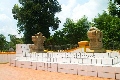
Visitors who come to the palace still have the chance to witness the collections of the kingdom which are displayed along the meeting room, such as the photos of the families, antique furniture gifted by the Dutch, and various types of weapons. A Cannon known as meriam buntung (a type of cannon which is cut off into a half). People believe that this cannon has its legend, and most of people call this cannon meriam puntung (puntung literally means maimed or amputated).

The story of this meriam puntung is related to the Green Princess. It is told that there was a very beautiful Princess in the Kingdom of the Great East. People knew her as the Green Princess because she always be shining in green. She had two brothers, Mambang Yasid and Mambang Khayali. It is said that once upon a time, the King of Aceh asked the princess‘s hands in marriage, but the proposal was refused by both of her brothers. The King was furious because over the refusal then attacked the Kingdom of the Great East. The King of Aceh successfully defeated Mambang Yasid and therefore had the power to take over the palace. Something happened miraculously when the king‘s troops entered the palace to take the Princess away. Her brother, Mambang Khayali, suddenly turned into a cannon and shot all over blindly, and this unstopped shot torn the palace into two. Its front part was found in an area known as Surbakti, located at the high plains of Karo (close to Kabanjahe). And the back part of the palace was thrown to Labuhan Deli, which was later removed to the yard of the Maimoon Palace.
This Palace is open for public every day but it is not when special ceremony is taken place.
2. The Location
The palace is located on the Brigadir Jendral Katamso Street, in the Sukaraja village, Medan Maimoon sub-district, the city of Medan, North Sumatra.
3. The Width
The width of the palace is more or less 2, 772 m, and the yard is at approximately 4 hectare. The length of the building from the front to the back is 75, 50 m and its height is to 14, 14 m. The palace has two floors and is propped up by wooden pillars and stone.
There are many children usually play at the yard of the palace during the noon.

4. The Architecture
The architecture of the palace is the mixture of different architectural styles of the Moghul, the Middle East, the Spanish, the India, the Dutch, and the Malay. The influence of the Dutch architecture is seen from the shape of the doors and the windows which are wide and high. However, there are also some doors with the Spanish architecture. The influence of Islam is seen from the arcade on its every roof. The height of the arcade is around 5-8 m. This type of arcade is popular in the Middle East, India, and Turkey.
The palace has three main rooms: the master building, the right wing, and the left wing. The master building is around 412 m2 wide. It is known as the Balairung where the throne is. There is also a big crystal lamp with European style in this room. The throne is used for important events such as the coronation of the kings or when the respectful homage by the families of the kings took place during the Islamic feast days.

There are 30 rooms in the palace with unique interior design and mixed arts from different countries. The eastern part of the palace looks like the palaces of the Moghul‘s kings from the outside.
5. The Architect
There are many opinions on the real architect who designed the palace. Some believe that the architect of it was an Italian, but the name is unknown. Some others, such as the tourist guides of the palace, say that the architect was a Dutch Captain, T. H. Van Erp.
6. The Renovation
The palace seems to be not well taken care of. This is because of the lack of finance from the Sultan‘s families. The cost for the maintenance is usually from the visitors. A renovation is obviously needed to make it more proper looking, and this is expected from anyone who concerns about the future of the national cultural heritage.
(TL/MA/18/01-08)
Photo credit: www.wisatamelayu.com
Translated from the Indonesian version by (MA) Read : 37.324 time(s).
Insert your comment here :


 Today
Today  Yesterday
  Last week
  Last month