You are visitor number 105.216.314 Since 01 Muharam 1428 ( January 20, 2007 )
AGENDA
No data available
News
20 juli 2010 03:40
New Twist for Solo’s Ethnic Music Festival
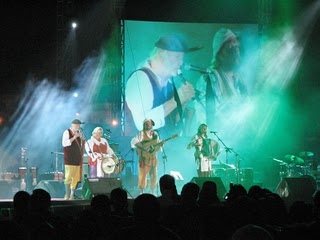
Surakarta, Indonesia- Staccato drum beats suggested images of a raucous crowd marching in unison. The techno rhythms, performed by six young musicians, filled Sriwedari Stadium in Surakarta last weekend.
The Singaporean group Sonofa performed on the second and fourth night of the five-day 2010 Solo International (Contemporary) Ethnic Music (SIEM), which was held from July 7-11.
Organizers added “contemporary” to the event’s name this year to challenge expectations imposed by the “ethnic” label.
Sonofa’s last performance fused synthesized and ethnic sounds, thus avoiding the impression of feeling out-of-place. The performance differed from the music of the Orkestar Trio, also from Singapore.
Composer Ramu Thiruyanam blended contemporary instruments with the rebana (drum) and Sundanese seruling (flute). His compositions were strongly influenced by world music.
The idea of exploring the sources of ethnic sounds may have originated from the diverse backgrounds of the three Singaporeans, who were Chinese, Indian and Malay.
Their adventurous spirit was palpable and their identities were not obscured by the sounds of contemporary instruments.
The solo performance of Taiwanese Lou Chao-Yun with her pipa, or traditional Chinese lute, was mesmerizing, as was the guitar performance of Kamal Musallam from Dubai, which was strongly influenced by Arab music.
Among local artists were Sahuni, who harmonized elements of the Gandrung dance from Banyuwangi; Muhammad Halim and Elizar Koto, who performed with a strong Minangkabau influence and Yani Newar from Flores.
SIEM 2010 offered performances that were different from those performed by local composers in late 1980s and mid-1990s in forums such as the Pekan Komponis (Composers’ Week) in Jakarta, Bandung, Yogyakarta, Surakarta and Flores.
Although not then called “ethnic music”, the performers explored the sources of sounds from many sub-cultures.
As aficionados know, local music was harder to find before the arrival of the Internet and social networking websites.
Alternative musical styles were previously only enjoyed by the performers, a few observers and researchers. The public learned of performances only through media reviews and recording products, such as cassettes or compact discs.
SIEM came to prominence when world music events and performances began to fade at the end of the 1990s. The only forum that composers could rely on was Bukan Musik Biasa (not an ordinary music) staged at the SurakartaCulturalPark and organized by composer I Wayan Sadra.
The bimonthly forum lasted for three years. Local composers from Jakarta, Bandung, Surabaya and Makassar joined international composers, such as Dieter Mack from Germany and Albert Chimedza from Zimbabwe.
Apart from serious students of ethnomusicology, SIEM was an entertaining event that people from all walks of life could enjoy.
The Dol performance by the Mayang Sari Studio from Bengkulu and the Calung Banyumas created by Darno were well received by audience. More than 5,000 people from various cities flocked to the event every night.
The audience was mostly comprised of young people whose musical references were more likely to be pop, rock and jazz.
Their appreciation was evident in the long applause that was heard after every performance.


 Today
Today  Yesterday
  Last week
  Last month