Wednesday, 2 September 2026 |Wednesday, 19 Rab. Awal 1448 H
Online Visitors : 1.845
Today
:
18.606
Yesterday
:
27.853
Last week
:
32.264.566
Last month
:
43.463.948
You are visitor number 105.216.314 Since 01 Muharam 1428 ( January 20, 2007 )
AGENDA
No data available
News
26 sepember 2009 01:00
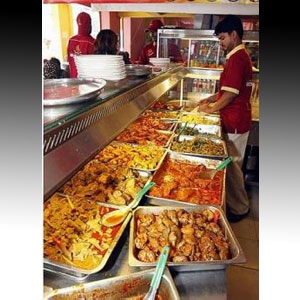
Penang: Nasi Kandar A Malaysian Original
George Town, Malaysia - The Penang Indian-Muslim community has expressed disappointment that nasi kandar and pasembur have not been included in the list of 100 types of heritage food and drinks on the National Heritage website (warisan.gov.my).
Restoran Kapitan chairman Abdul Wahab Mohamad Hanifah said nasi kandar is “definitely a Malaysian original” and should be promoted as such because their ancestors from India first dreamed it up in Penang in the 1900s.
“They worked at the nearby port and would concoct different curries with whatever ingredients they had.
“Nowhere else can you find nasi kandar that comes close to the Penang version because the water here is special – it is sweet.
“Even when my cooks bring all the ingredients to Kuala Lumpur and prepare the food there, the taste is slightly different,” he said, adding that the dish should be promoted as a “Malaysian original”.
Pelita Nasi Kandar chain director K.K. Sihabutheen said nasi kandar should be the number one item in any “original Malaysian food list”.
“Not only was the nasi kandar created here, but Penang nasi kandar is the most popular around,” he said.
Since the 1930s, nasi kandar has played a prominent role in the culinary history of Penang.
Its origins date back to the days of yore when Indian-Muslim immigrants roamed the port and dusty streets of colonial Penang, carrying containers laden with home-cooked dishes and rice slung on both ends of a kandar (a wooden stick).
Most people also believe that pasembur, or Indian rojak as it is known in some states, is another Malaysian original first served by the Indian-Muslim community here.
Gani Famous Pasembur owner Jamil Kader Gani, whose family had been making this dish for three generations, “guaranteed” that pasembur was born in the state.
“Nowhere else in the world will you find such variety and the gravy is also special because most pasembur sellers make their own gravy according to their family recipes.
“Pasembur arrived here around the same time as nasi kandar and should be promoted as wholly Malaysian,” he said.
Tourism Minister Datuk Seri Dr Ng Yen Yen`s recent statement that nasi lemak, laksa, bak kut teh, chilli crab and Hainanese chicken rice were Malaysian dishes has sparked off a “food fight” on the Internet, with some unhappy Singaporeans insisting that chilli crabs, Hainanese chicken rice, nasi lemak and bak kut teh were theirs.


 Today
Today  Yesterday
  Last week
  Last month