1. The History
Kadriah Sultanate was established on October 23rd, 1771 C.E. (Rajab14th, 1185 H), under Van Der Varra‘s control (1761-1775 C.E.), the 29th of the general governor of VOC (Vereenigde Oostindische Compagnie). The founder was Sharif Abdurrahman Al-Kadrie, son of Habib Husein Al-Kadrie, Arabian descendant, and Pontianak ulama. From his youth, Sharief Abdurrahman had shown his ability and his ambition. According to the written records, he had ever traveled to Siak and Palembang, traded some stuffs in Banjarmasin, and joined the war against France colonialism until defeated them in Pasir (Banjarmasin).
The historical founding of the sultanate was signed by the intention of Sharif al-Kadrie, his brother, and his followers to seek resident, after the death of his father (1184 H) in Mempawah Kingdom. By fourteenth boats, they went through Peniti River to cape of Kelapa Tinggi Segedong, and settled the place. However, Sharief al-Kadrie felt that the place was inconvenience to be settled, so that they continued their voyage to the upstream of the Peniti River through small Kapuas River. When they went along the river, the group of Sharif al-Kadri founded a small island, Batu Layang. They then transited for a moment at there. At the same time, they were bothered by ghosts that caused Sharief al-Kadrie for asking help to his followers for driving out them. They, afterward, went on their voyage through Kapuas River.
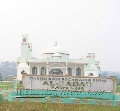
On October 23rd, 1771 C.E. (Rajab14th, 1185 H), before subuh prayer, the Sharif al-Kadri‘s group then arrived at the estuary of Kapuas River and Landak River. They subsequently felled trees in the forest for eight days to build their houses, public hall, and etc. In this place, the Kadriah Sultanate was established, together with its mosque and Pontianak castle.
On Sya‘ban 8th, 1192 H, Sharif Al-Kadrie was appointed as the Sultan of Pontianak (Kadriah Sultanate) with his title Syarif Abdurrahman Ibnu Al Habib Alkadrie. Raja Muda of Riau, Raja Mempawah, Landak, Kubu, and Matan were presents in this coronation. Based on the written records, this sultanate was the last kingdom in Kalimantan, and the origin of Pontianak city. After the end of the Kadriah Sultanate, the ruling system of sultanate automatically turned into the governmental system of Pontianak city.
2. The Kings of the Kingdom
The Kadriah Sultanate was ruled by eight sultans since 1771 to 1950 C.E. that could be depicted as bellow:
- Sultan Sharif Abdurrahman Al-Kadrie (1771-1808 C.E.)
- Sultan Sharif Kasim Al-Kadrie (1808-1819 C.E.)
- Sultan Sharif Osman Al-Kadrie (1819-1855 C.E.)
- Sultan Sharif Hamid Al-Kadrie (1855-1872 C.E.)
- Sultan Sharif Yusuf Al-Kadrie (1872-1895 C.E.)
- Sultan Sharif Muhammad Al-Kadrie (1895-1944 C.E.)
- Sultan Sharif Thaha Al-Kadrie (1944-1945 C.E.)
- Sultan Sharif Hamid II Al-Kadrie (1945-1950 C.E.)
3. The Kingdom Period
The Sultanate had been established for almost two centuries, since 1771 to 1950 C.E. The sultanate was led by eight sultans during its existence. When the sultanate broke up in 1950, with the merger of some districts to Indonesian Republic, the governmental system had been changed to the governmental city of Pontianak.
In 1943-1945, the patriotists of West Kalimantan, fought shoulder to shoulder against Japanese colonialist in Indonesia. Its summit was the secret meeting on October 16th, 1943, in Gedung Medan Sepakat Pontianak which presented by prominent figure of different societies. They agreed on the gaining of Japanese colonial authority and established Negeri Rakyat of West Kalimantan which was completed by eighteen ministers.
On December 8th, 1943, they fought Japanese colonialist for the second time. Since their fighting had been penetrated by the enemy, on October 23rd, 1943, many Indonesian, Chinese, Arabian, and Indian leaders were captured by Japan. In the second capture (January 24th, 1944), Dr. Rubini, together with his wife, Demang Muslim Nataprana, and all West Kalimantan Kings, for instance, Sultan Sharif Muhammad al-Kadrie, Sultan Muhammad Yusuf Al-Kadrie (the Sultan of Pontianak), Muhammad Ibrahim Tsafiuddin (the Sultan of Sambas), Sultan Hamid (Panembahan Ketapang), and so on, were captured by Japan.
When Sultan Sharif Hamid II Al-Kadrie ruled the sultanate (1945-1950 C.E.), he contributed many things for the Republic of Indonesia. After he had appointed as the chief of Bizonder Federal Overlag (BFO) or Federal Conference in 1948, he involved the yielding sovereignty and acknowledgment of Indonesian independence from the Dutch colonial control. Sultan Hamid II was the designer of the state‘s symbol that represented by garuda bird, using shield, encompassing five sila (Pancasila). Through the time, the Kadriah Sultanate then turned into Pontianak city.
According to law no. 25, 1956, West Kalimantan Province was determined as local autonomy with Pontianak as its capital. The local autonomy was valid since the first of January 1957 to 1993. This date considered as the born of West Kalimantan Province. After the Kadriah Sultanate ruined, the written records witnessed that the castle and the mosque of the sultanate are now regarded as the fascinating tourism places in West Kalimantan.
4. The Kingdom Territory
The authority of the Kadriah Sultanate were the districts which are now called as West Kalimantan Province.
5. The Kingdom Structure
(In the process of data collecting).
6. The Socio-Cultural Life
The Kadriah Sultanate was bigger than other kingdoms in Kalimantan‘s territories such as, Sambas and Banjar Kingdoms. The Kadriah Sultanate had rapidly improved by the fairway and trading activities, caused many Nusantara and foreign boats to come to the port for trading commercial commodities. There were commodities these sold here: diamond, gold, candle, rattan, dipterocarpaceae trees (tengkawang), rubber, sago powder, gambier, areca nut, nest of bird, copra, black and white pepper, coconut, and etc. The developing of the sultanate gave impacts on their social life, and brought them to involve in economic, agricultural, and commercial activities.
Many visitors settled on this district. Every new comers, who came from different countries and tribes, were given certain places for residing in this territory. Therefore, the names of districts (villages) indicated to the characteristics of races and entities such as Kampung Bugis, Melayu, Tambelan Sampit, Banjar, Bali, Bangka-Belitung, Kuantan, Kamboja, Bansir, Saigon, Arab, Tanjung, Kapur, Parit Mayor, and so on. Those villages represented compositions of society in the Kadriah Sultanate that contained indigenous people (Malay), Arabian, Chinese, Europe, and etc. The ethnic heterogeneities were the main characteristics of the societal composition in the Kadriah Sultanate (now is recognized as Pontianak).
The society of Pontianak was socially categorized by ethnic identity, religion, and race. The categorization based on race: the first, Dayak community that dwelled in the interior country. This community was closed community, they gave priority to the sameness and the unity of socio-cultural life. The second, Malay, Bugisnese, and Arabian communities, which were known as Islamic practitioners in this territory, they more paid their attention to social histories as the rulers. The third, Chinese immigrants who dwelled the coastal territory, and renowned as homo economicus that became union of social-economic life.
Besides the ethnicities, Pontianak community had different religions. The Malay were usually embraced Islamic religion, and the most of Dayak people were normally believed in animism teachings, and Chinese immigrants were embraced neither Islam nor animism. The Dayak who had converted to Islam would leave their identity, and turned into Malay personality. This phenomenon was a sign of Islamization process and Malaynization of Dayak non-Moslem community in the district. The further development indicated that the Malay community could confess to be “indigenous people” as well as Dayak people. The relationship between ethnicity and religious belief, in their socio-cultural life, could be concluded that the association of the neighboring inhabitants, and the similar background of language family, would be differed if they entered the community which based on their religious beliefs.
(TN/trj/23/10-07)
References :
- Hasanuddin dan Budi Kristanto, “Proses Terbentuknya Heterogenitas Etnis di Pontianak pada Abad ke-19”, from http://jurnal-humaniora.ugm.ac.id.
- www.geocities.com/rhie_malay.
- www.wikipedia.org.
Read : 57.434 time(s).
Comment of "kadriah pontianak sultanate"
03 Jun 2010.
YM Syed Abi Ghufran Al-Idrus 
salam..ada sedikit pembetulan pada 3 nama sahabat habib husein al-qadri tu..nama yg saudara tulis tu adalah kurang tepat...jika dilihat dr sudut salasilah zuriat mereka dan kitab nasab...- us syed abi ghufran al-idrus |
23 Sep 2011.
muhammad yusuf ghazali
ada anak cucu kesulatanan qadariyyahh bernama syekh abdul "badaruddin" al qadri,,itu memimpin kerajaan apa ya |
16 Nov 2012.
ahmed tarmizi yusuf
syarif abdulrahman alqagrie, adalah seorang petualang, pemimpin yang banyak pengikutnya. ada 3 orang temannya yang selalu mengikutinya kemana dia pergi, mansour, yahya, dan mahmud. saya mau tanya, setelah syarief addulrahman alqadrie menjadi sultan di kadriah pontianak. kemanakah 3 orang temannya ini...?
terima kasih. |
Insert your comment here :


 Today
Today  Yesterday
  Last week
  Last month