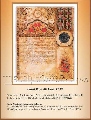
Sultan Iskandar Muda
A. Biography
The story of Sultan Iskandar Muda is not merely a fairy tale like what Snouck Hurgronje said. Since his research about the history of Aceh was based on the classical Malay literatures such as Bustan al-Salatin, Hikayat Aceh, and Adat Aceh, some facts of Aceh history had been misunderstood by him. Beyond comparison, Deny‘s Lombard‘s research entitled Kerajaan Aceh: Zaman Sultan Iskandar Muda (1607A.D. -1637A.D.) (Aceh Kingdom: Sultan Iskandar Muda Periode (1607 A.D. – 1637 A.D.)) used some references not only from classical Malay literatures, but also references from Europe and China. In addition, he also took some sources from the European travelers who ever stayed in Aceh such as Frederik de Houtman, John Davis, and Augustin de Beaulieu. His research shows the obvious historical facts of Aceh, rejecting Hurgonje‘s thesis. He proved that the tenure period of Sultan Iskandar Muda was the golden age of Aceh Sultanate.
Sultan Iskandar Muda was the most influential Sultan in the Aceh Sultanate. He was born in Aceh, whose nickname was Perkasa Alam in 1593 A.D. He was the offspring of Darul-Kamal King from maternal line. While from paternal line, he was the offspring of Makota Alam King. His mother named Putri Raja Indra Bangsa / Paduka Alamsyah who was the daughter of Sultan Alaudin Riayat Syah, the tenth Sultan of Aceh. She married to Sultan Mansyur Syah, son of Sultan Abdul Jalil (Sultan Alaudin Riayat Syah Al-Kahhar‘s son/ the third Sultan of Aceh). Therefore, both his mother and father were the heirs of the Aceh Sultanate. Sultan Iskandar Muda married to a daughter of Simargolang King when he was stopped in Tajung (the meeting point of Asahan and Silau Rivers) on his journey to Johor and Malacca in 1612 A.D. From his second marriage, his wife gave birth to Abdul Jalil/ The I Sultan of Asahan.
In fourteen, he was inaugurated as the Sultan of Aceh reigning during 1607 A.D. until 1636 A.D. (29 years). However, historians are still debating about when he started reigning Aceh. Referring to Bustan al-Salatin, he was inaugurated on Dzulhijjah 6th 1015 H (April 1607 A.D.). He was sophisticated in turning Aceh Sultanate into a powerful sultanate that was highly respected by either Kingdoms in Indonesia or foreign countries. That is why, his tenure period was noticed as the golden era of Aceh Sultanate thus the Aceh Sultanate was included into the five biggest kingdoms in the world.
The main step of Sultan Iskandar Muda in strengthening the Aceh Sultanate was building up the armed forces consisting youth soldiers. He had conquered Deli, Johor, Bintan, Pahang, Kedah and Nias during 1612 A.D. to 1625 A.D. He took a great concern with the economic system of Aceh Sultanate. A strategic commerce port named Kutaraja (now Banda Aceh) was built directly faced Malacca strait. This commerce port connected Aceh Sultanate with foreign countries so it could improve the economic growth of Aceh Sultanate.
In economic cases, he applied Baitulmal (Islamic treasury system) system and increased the export tax intended for a better Aceh civilization. He built up an 11 km long sanitation and irrigation for irrigating people‘s farm flowing from river to the sea. It was not only used for irrigation but also for water distribution to the people.
He was noticed as a king who had close relationships with Europe. He had ever made a communication with England, Netherlands, France, and Turkey. In the 16th century, he arranged a relationship with British Kingdom when it was held by Queen I Elizabeth. By her messenger (Sir James Lancester), Queen I Elizabeth started her letter to Sultan Iskandar Muda with “Kepada Saudara Hamba, Raja Aceh Darussalam” (Dear my Brother , Aceh Darussalam King). While, Sultan Iskandar Muda replied with “I am the mighty ruler of the religions below the wind, who holds way over the land of Aceh and over the land of Sumatera and over all the lands tributary to Aceh, which stretch from the sunrise to the sunset.”
On his tenure period, there were laudable ulama (Scholar of Islam/ Moslems religious leader/ teacher), one of them was Syiah Kuala as the highest mufti (Adviser on religious law for a region above the qadi in authority). Both Sultan Iskandar Muda and Syah Kuala were king and ulama which helped each other in running the Aceh Sultanate. Their relationship could be said “Adat bak Peutu Mereuhum, syarak bak Syiah di Kuala” (Customary law was Sultan‘s authority while religious case was Syiah Kuala‘ authority). He also relied on some other ulamas like Syeikh Hamzah Fanshuri and Syeikh Syamsuddin as-Sumatrani that were regarded as the highly respected poets in Indonesian history. Their advices had big contributions to Sultan‘s policies.
He died on December 27th 1636 A.D. in Aceh when he was 43 years old. His reign was succeeded by his son in law named Sultan Iskandar Tani (1636 A.D. – 1641 A.D.). Sultan Iskandar Tani‘s reign was succeeded by his wife named Sultanah Tajul Syafiatudin Syah/ Puteri Safiah (1541 A.D. – 1675 A.D.) who was the daughter of Sultan Iskandar Muda.
B. Thoughts
Sultan Iskandar Muda was a national hero who has contributed in building the strong character of Indonesian. During his tenure, he used to show his anti-colonialism attitude. He was known as a king who was strict to kingdoms working out close relationships or cooperation with Portuguese as the only colonial government in Indonesia at the time. For instance, during 1573 A.D. – 1627 A.D.he set jihads (A holy war fought by Muslims against those who reject Islam- OXFORD; 1995) against Portuguese for 16 times, but the missions failed as the strong fortress of the opponent. This defeat had made a drastic subtraction to the number of inhabitants, thus he decided to withdraw all people from his conquests in West Sumatera, Kedah, Pahang, Johor and Malacca, Perak, and Deli to migrate to Central Aceh.
In his period, the regulation and state administration were divided into four cases based on the inhabitants‘ cultural system. First, the regulation was the authority of Syaikhul Islam or Qadhi Malikul Adil (Islamic judge), for him, law was a foundation of safety and peace. It was hoped that the existence of law would bring justice for all people. Second, custom and tradition case was relied on Sultan‘s policy and Sultanate‘s counselors. This department had great contributions on the state administration especially managing the status of hulu balang (commanders) and Sultanate‘s functionaries. Then, Resam (customary way) was the responsibility of military commanders. Resam was a rule having been regarded as the customary law then it was applied by the judges of customary law. If there were problems not stated in the customary law, it was decided by resam that was done cooperatively. The last, Qanun was the authority of Maharani Putro Phang/ the consort of Sultan Iskandar Muda. All of these aspects had been applied from the first Aceh Sultanate period.
He was noticed as a king who was strict in applying the Islamic jurisprudence. He even stoned his son named Meurah Pupok for sexual act outside of marriage with a wife of military officer. In addition, he also forbade the usury economic system, so it is not a strange that in present Aceh local government applies the Islamic jurisprudence since it has been started long time ago. He was also known for embracing tasawuf / sufi (Islamic mysticism).
He gave notice his people especially the next generation of Aceh Kings to do eight affairs like bellow:
- For all wazir (ministers), commanders, state employees and citizens to keep on remembering God and fulfill promises.
- For all kings, do not deprecate wise ulamas and wise people.
- For all kings, do not believe whatever coming from enemies.
- For all kings, improve the military armed forces by purchasing as many as weapons.
- For all kings, be prudent and pay attention to the citizens‘ needs.
- For all kings, run the Islamic jurisprudence based on Al-Qur‘an and Sunnah
- Qiyas/ Ijma‘ may be the sources for deciding law after Al-Qur‘an and Sunnah
- Use the sultanate‘s law/ customary law/ resam and qanun after Qiyas/ Ijma‘
All of these indicated that he was a wise king concerning with religious case, citizens and Aceh Sultanate.
Hamka appraised the figure of Sultan Iskandar Muda as a prudent leader having the tendency to keep on the straight way by firmly holding the Islamic Jurisprudence and his principles. Relating to his leadership, Antony Reid appraised him as a king who was very successful in running the authoritative, centralistic and expansionist reign. The characteristic of Sultan Iskandar Muda was influenced by his grandfather. At the time, the glory of Aceh Sultanate was really influenced by the monarchy system that is totally different from the modern system such as democracy.
C. Works
Sultan Iskandar Muda‘s letter to King James I in 1615 A.D was one of his amazing works. It was written in Malay language, decorated by beautiful flower motives with a meter high. It was noticed as the biggest letter in the world history. It was intended to show the international world about the importance of Aceh Sultanate as a main power in the world.
The glory of Aceh was not only marked by his revolutionary policies but also his wide conquest areas. In his period, Aceh Sultanate stretched out to the west coast of Minangkabau and Perak.
D. Awards
In the Presidential decision No. 077/TK/Year 1993, on September 14th 1993, Sultan Iskandar Muda was awarded the title “National Hero”. He was also awarded “Bintang Mahaputra Adipradana (Kelas II). To honor him, some streets in Indonesia named after him including the name of street in banda Aceh. Kodam Iskandar Muda is the name of military area commands in Aceh Province.
(NI/ter/04/03-08)
References:
- Hamka, Dari Perbendaharaan lama, (Jakarta: Pustaka panjimas, 1982).
- Mukhlisuddin Ilyas, “Aceh dalam Lintasan Budaya”, cited in www.acehinstitute.org
- Winarno, Sejarah Ringkas Pahlawan Nasional, (Jakarta: Erlangga, 2006)
- www.e-aceh-nias.org
- www.ruangbaca.com
- www.wikipedia.org
Read : 57.021 time(s).
Insert your comment here :


 Today
Today  Yesterday
  Last week
  Last month